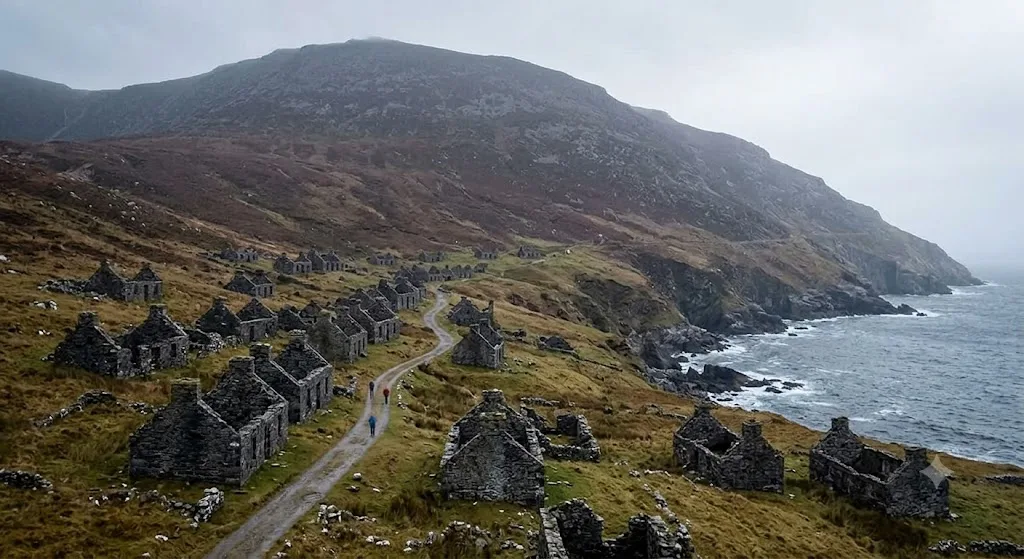
Forget the Blarney Stone and the Ring of Kerry for a moment; Ireland’s most enchanting places are often tucked away, far from the tour buses and selfie sticks. While we’re not suggesting you skip the icons, we believe true discovery lies in the whispers of forgotten valleys, the echo of history in derelict halls, and the raw beauty of cliffs that don’t make the standard itineraries. If you’re yearning for an authentic Irish experience, here are 10 secret, off-the-beaten-path places that will reveal a totally different, magical side of the Emerald Isle.
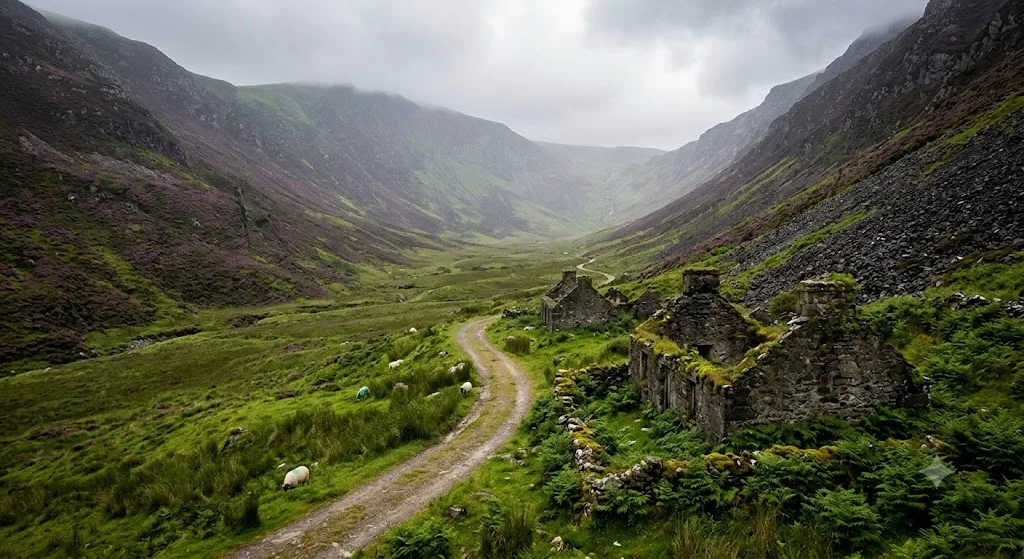
1. The Lost Valley, County Mayo
Deep within the rugged landscape of South Mayo, near Louisburgh, lies the Lost Valley, or Mám Éan (Pass of the Birds). This is not just a scenic hike; it’s a portal to a lost world. This silent, magnificent glacial valley was once a thriving community, tragically decimated during the Great Famine in the 1840s. A local guide is essential here, leading you past original lazy beds (potato ridges) still carved into the hillsides and the haunting ruins of pre-Famine cottages that stand as quiet witnesses to a tragic past. As you walk the path, the dramatic cliffs and total seclusion create an atmosphere that is profoundly moving and beautiful. The story of survival and loss etched into this landscape is unforgettable.
2. Classiebawn Castle, County Sligo
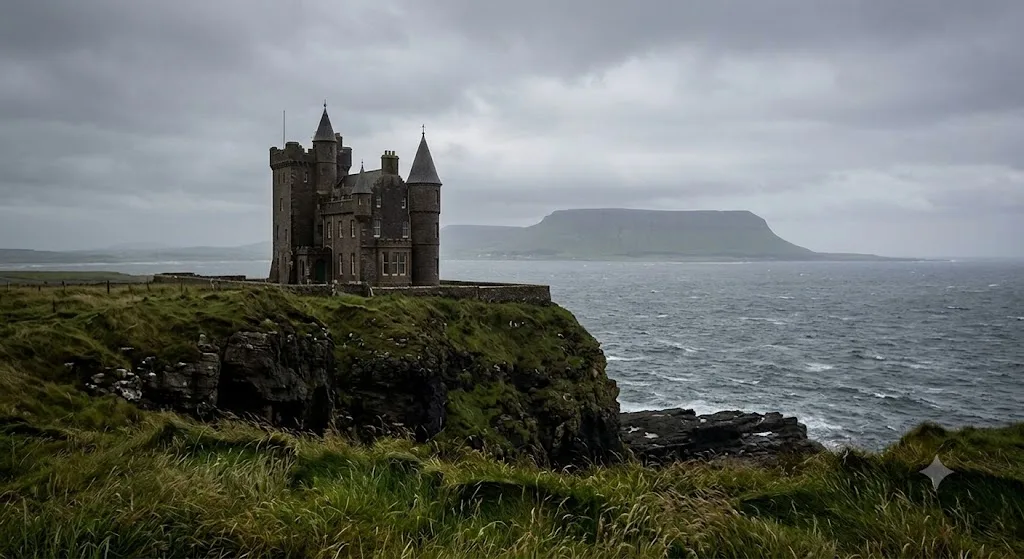
While you cannot currently enter Classiebawn Castle, its dramatic silhouette is arguably the most striking image in all of County Sligo. Perched on a cliff edge on the Mullaghmore Peninsula, it guards the wild Atlantic. Built in the 19th century for Viscount Palmerston, the castle has a controversial history, notably being the summer home of Lord Mountbatten until his assassination by the IRA just offshore in 1979. Today, its isolated, fairytale appearance against the backdrop of the iconic Benbulben mountain (the distinctive flat-topped peak in the distance) makes it a spectacular, secret photo opportunity, far from the standard tourist stops. It embodies the beautiful melancholy of the wild West of Ireland.
3. Dunluce Castle, County Antrim
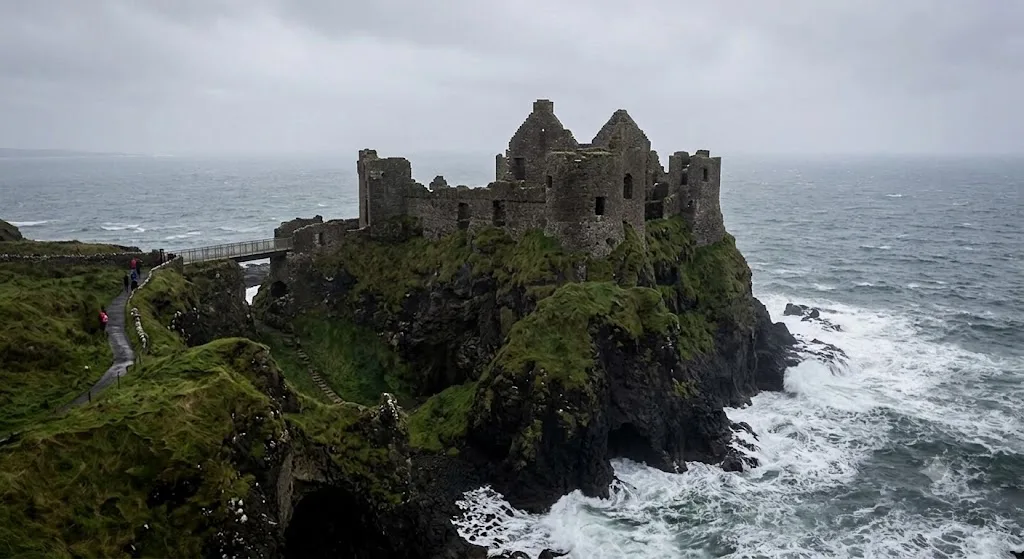
While Dunluce is certainly well-known, its dramatic history and precarious setting make it feel like a discovered secret every time you visit. Perched dramatically on a sheer basalt outcrop on the Antrim Coast, this medieval ruin is accessible only via a bridge from the mainland. It was the seat of the MacDonnell clan, and history tells of a night in 1639 when the castle kitchen collapsed into the sea during a storm, taking the cooks with it. This site, with its sheer drops into the swirling ocean below and the iconic white cliffs of the coast flanking it, offers a breathtaking combination of historical drama and raw natural power, capturing the spirit of the Wild Atlantic Way (or, in this case, the Causeway Coastal Route).
4. The Gougane Barra Forest Park, County Cork
Nestled in a lush, glacial valley in West Cork, Gougane Barra is a place of profound peace and spiritual pilgrimage. The source of the River Lee, it’s famous for the tiny, picturesque St. Finbarr’s Oratory, which sits on an island connected to the mainland by a small causeway. While the church is idyllic, the real secret is exploring the surrounding forest park. Beyond the lake, miles of silent, moss-covered forested trails wind upwards into the mountains, offering breathtaking, misty views of the lake and the small island below. It’s a sanctuary of green reflection, perfect for those seeking solitude and a connection with nature, far from the busy coastline.

5. The Victor’s Way Indian Sculpture Park, County Wicklow
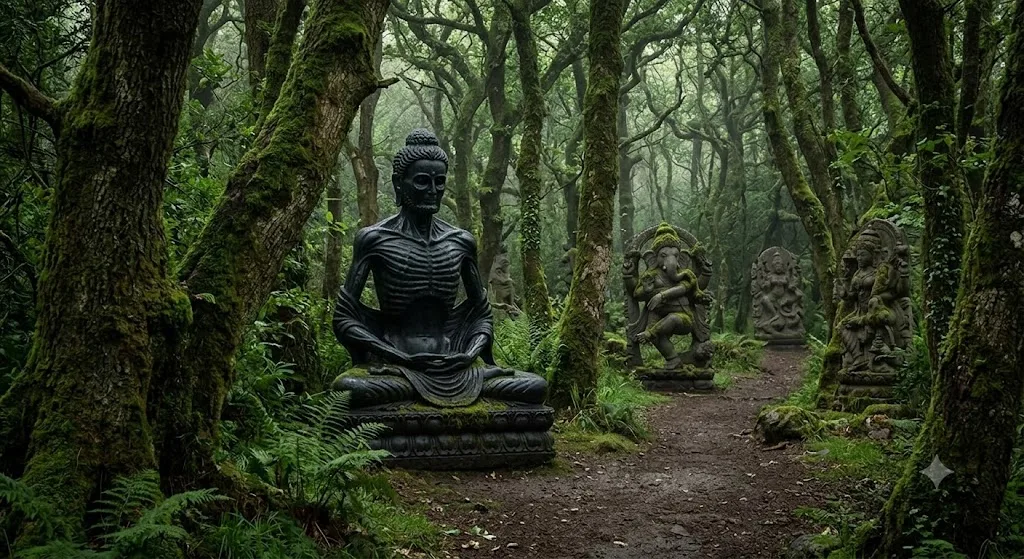
This is perhaps the most surreal and unexpected “secret” in Ireland. Tucked away in the dense woodlands near Roundwood, County Wicklow, Victor’s Way is a private meditation garden designed for self-reflection. It’s home to dozens of large, black granite sculptures, hand-carved in India, representing various stages of spiritual awakening and life’s path. The sculptures range from beautiful and serene deities to fasting Buddhas and rather shocking, macabre figures. A wander through these silent woods, discovering these unexpected masterpieces hidden among the ferns and ancient trees, is a contemplative—and slightly unsettling—experience completely unlike any other in Ireland.
6. The Great Pollet Arch, County Donegal
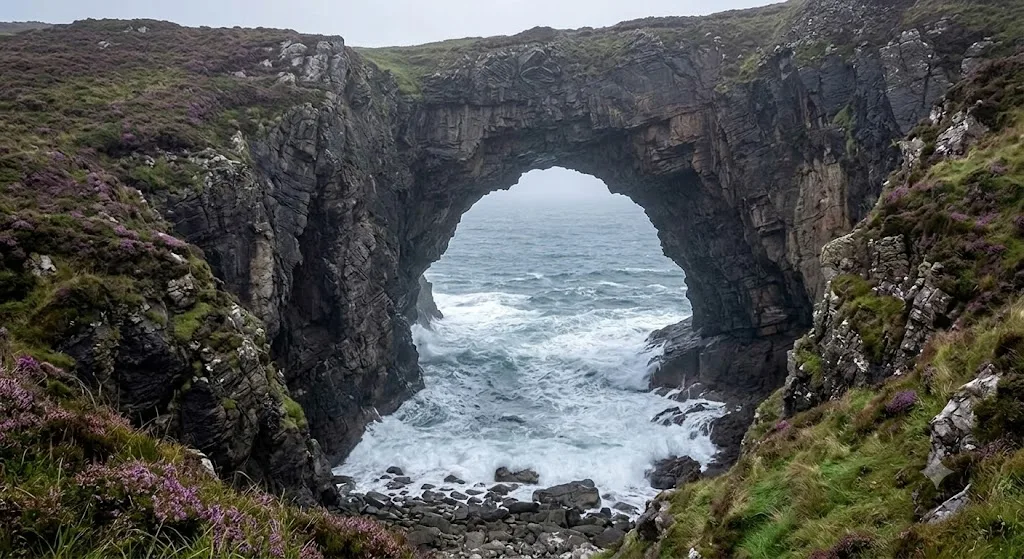
Located on the Fanad Peninsula in County Donegal, the Great Pollet Arch is one of Ireland’s most massive and magnificent natural sea arches, yet it remains remarkably obscure. It was formed over millennia by the brute force of the Atlantic Ocean sculpting the quartzite cliffs. Reaching it requires a short walk through private farmland (always respect the landowners) and down to a secluded, rocky beach. Standing beneath its colossal span, looking out at the turbulent ocean framing the distant rugged coastline, is a humbling experience. It’s a raw, powerful masterpiece of nature that feels completely wild and undiscovered.
7. The Inishkea Islands, County Mayo
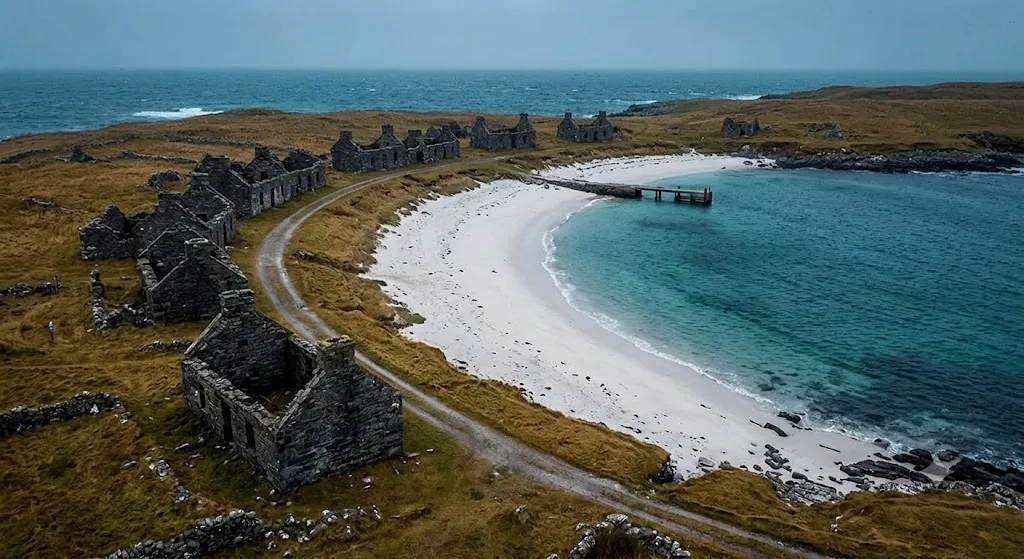
For a true escape, look to the Inishkea Islands, lying just off the coast of the Mullet Peninsula in County Mayo. Abandoned in the 1930s following a fishing tragedy, Inishkea North and South are now silent, evocative ghost islands. Accessible only by private charter boat, they offer a haunting landscape of roofless stone cottages crumbling into the machair (grassy coastal plain), early Christian cross-slabs, and pristine, deserted white sand beaches that look almost tropical (until you feel the water!). The atmosphere is one of profound isolation, where the only sounds are the cry of barnacle geese and the crash of the Atlantic. It’s a powerful, beautiful, and deeply secret place that time is slowly reclaiming.
8. The Dunnyneill Islands, Strangford Lough
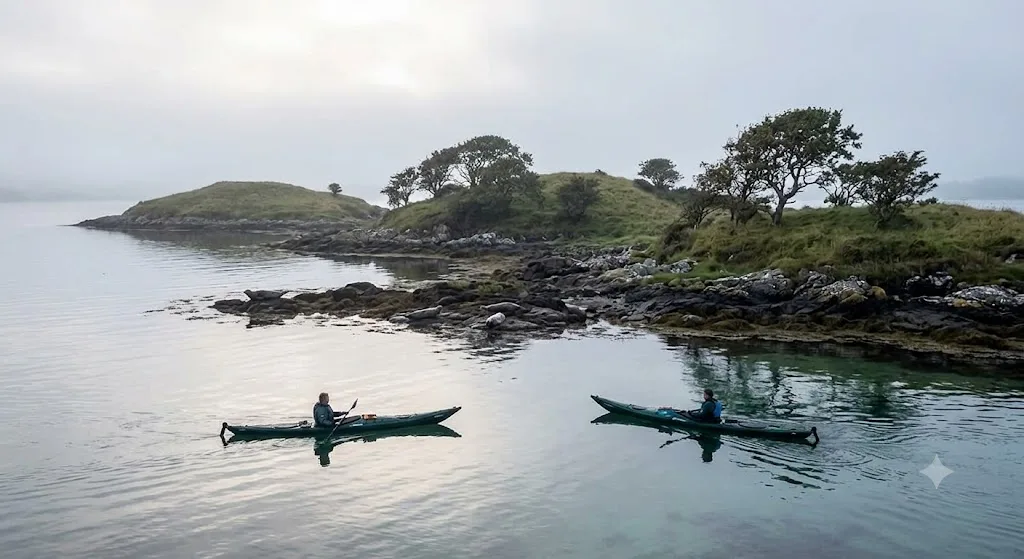
Strangford Lough in County Down is an Area of Outstanding Natural Beauty, but most visitors only see it from the shore. The real secret is to take to the water and explore its inner archipelago. Among its nearly 100 islands, the Dunnyneill Islands are particularly enchanting. These tiny drumlin islands (formed by glacial action) are accessible by kayak or small boat. As you paddle through the calm, clear waters, you’ll encounter seal colonies basking on the pladdies (exposed rocky reefs) and an incredible variety of seabirds. Landing on Dunnyneill feels like discovering your own private kingdom—a silent, pristine world of grassy slopes and shorelines, miles away from the modern world.
9. The derelict village of Port, County Donegal
Tucked away in the remotest corner of Southwest Donegal, past the spectacular Glencolumbkille, lies the ghost village of Port. This is not a “museum” village; it is a truly abandoned settlement, decaying slowly into the boggy landscape. Reachable only by a narrow, winding R-road that dead-ends at the sea, Port consists of perhaps a dozen roofless, gabled stone cottages standing silently overlooking a rugged, storm-battered cove. Once a vibrant fishing community, it was deserted in the mid-20th century. Today, it offers a powerful, melancholic glimpse into a vanished way of life, set against some of the most dramatic coastal scenery in Ireland, far from the tourist trail.
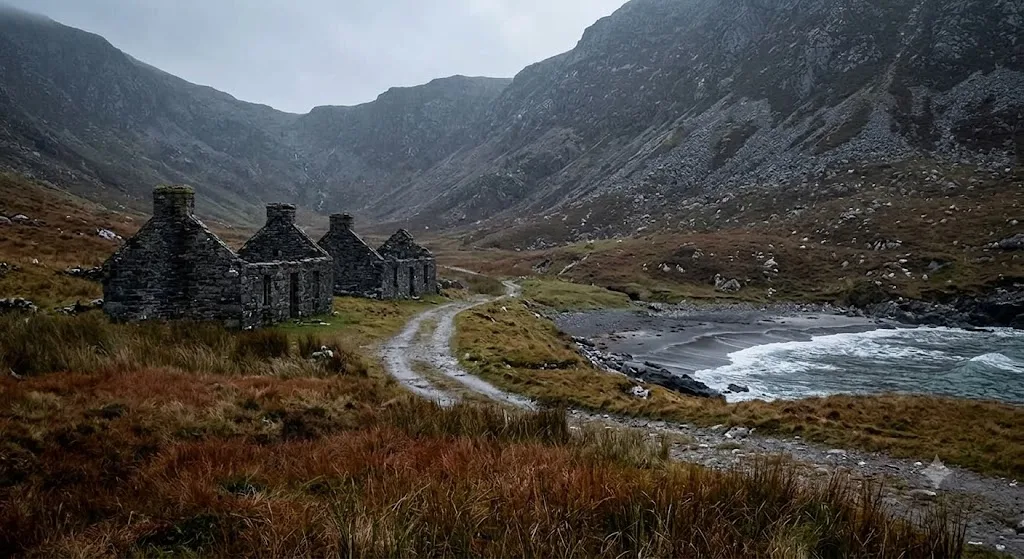
10. The pre-Famine village of Slievemore, Achill Island
While Achill Island is a popular destination, the Deserted Village of Slievemore offers a stark, haunting encounter with history that many miss. Lying on the slopes of Slievemore mountain, this settlement consists of the poignant ruins of nearly 100 stone cottages. Unlike villages abandoned during the Famine, Slievemore was a ‘booley’ village, used sequentially for centuries for summer grazing, until it was finally deserted in the 1840s as the Famine devastated the region. Walking the path through these silent, roofless skeletons, with the Atlantic gale blowing through the gables and the dramatic coastline of Achill stretching below, is a deeply moving experience of connection to Ireland’s tragic past and enduring beauty.